
The project
Stable island grid operation of a converter-dominated medium-voltage grid
Why the power grid of the future works differently – and how Fuchstal helps to understand it.
Motivation
The energy transition is fundamentally changing the grid
By 2030, 80 % of Germany’s electricity is to come from renewable sources. Large coal and gas power plants currently provide most of the ancillary services that keep the grid stable. With them, the synchronous machines whose rotating masses cushion frequency fluctuations are also disappearing.
They are being replaced by many small photovoltaic and wind power plants that feed into the grid via power converters. Consumers, too, increasingly use power converters. In future, these plants will have to provide essential grid services such as inertia, balancing power and voltage control.
At the same time, the risk of large-scale blackouts is rising: fluctuating generation, declining inertia in the grid, delayed grid expansion and electricity trading over long distances. A working emergency island grid can keep a municipality supplied in such a situation.
Research question
How can stable grid operation be achieved in practice in a grid without a central control structure that is supplied and loaded exclusively by power converters?
Central coordination of all controllers, as is common in small island grids, is not an option for the large interconnected grid. Frequency and voltage must therefore remain stable without higher-level communication – using plants that reflect today’s state of the art.
Objectives
What the project investigates
Interactions
Identify and avoid undesired interactions between the controls of grid-forming and grid-following converters.
Inertia
Assess the contribution inverters can make to inertia and short-circuit current.
System stability
Investigate voltage and frequency stability during load changes and when equipment is energised.
Grid transition
Enable a smooth transition between interconnected and island grid operation.
Grid codes
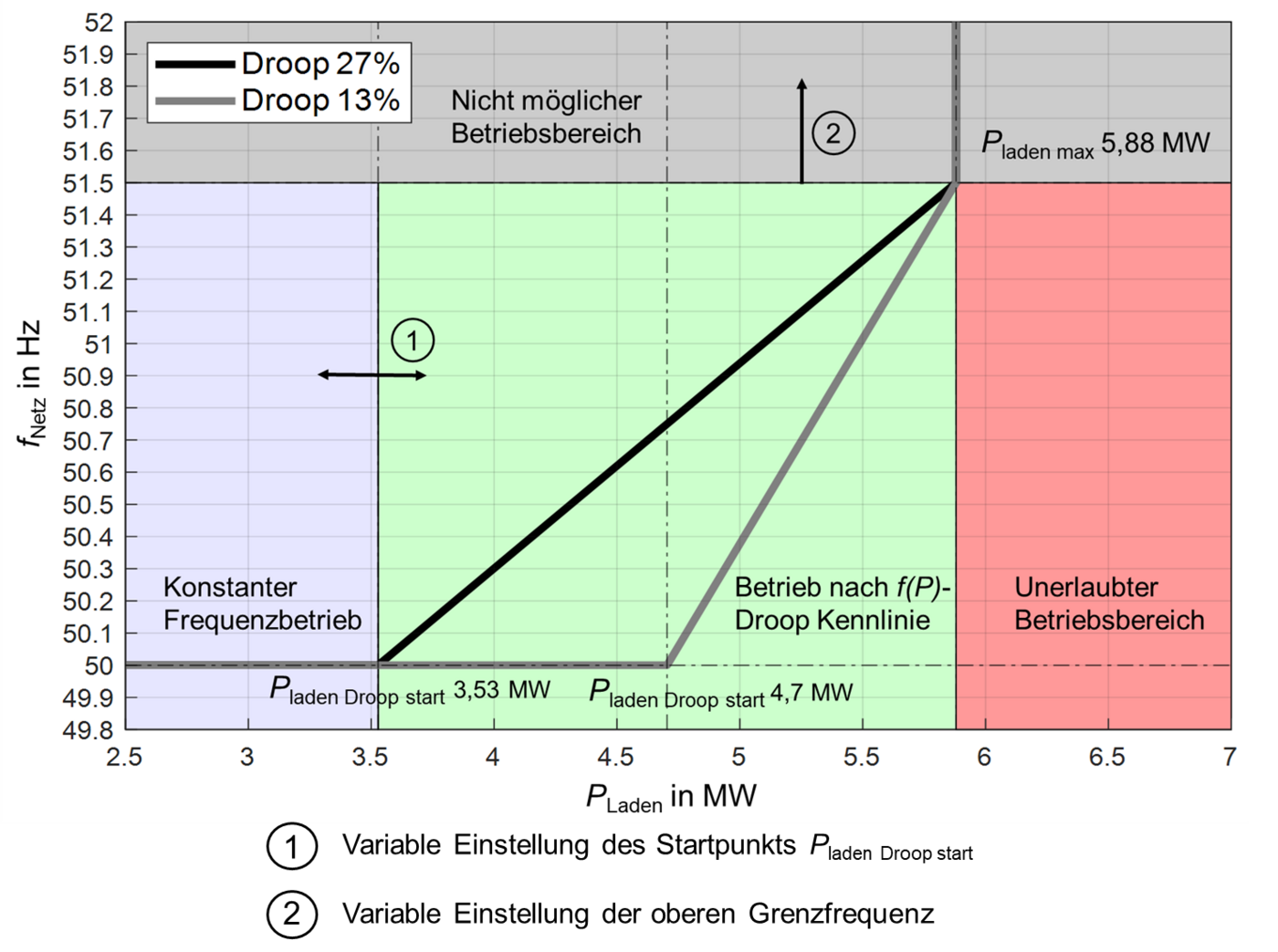
Critically review the German technical connection rules (TAR) and their P(f) and Q(U) characteristics for their suitability for future grid stability.
Protection & energy management
Develop protection concepts and operating strategies for inverter-dominated grids and island grid operation.
Goal for the municipality: a proven concept for the emergency supply of Fuchstal in the event of a blackout – fed by wind, sun and the battery storage system.
Approach
Simulation and field testing go hand in hand
Before each field test, the universities build a simulation model of the entire grid and test the parameter settings of the plants. This allows every test to be planned safely. The measurement data from the field are then used to check and improve the models.
- RMS simulations represent the frequency and voltage behaviour in the island grid.
- EMT simulations reveal fast control interactions and switching transients.
- Energy system models plan the available energy in the battery and from the wind.
- Staged field tests add further plants to the island grid step by step.
The living lab
Energiezukunft Fuchstal
More on the municipality’s energy concept (in German): fuchstal.de – Energiezukunft Fuchstal
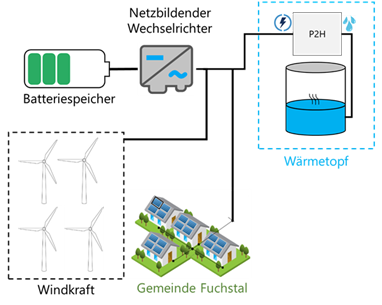
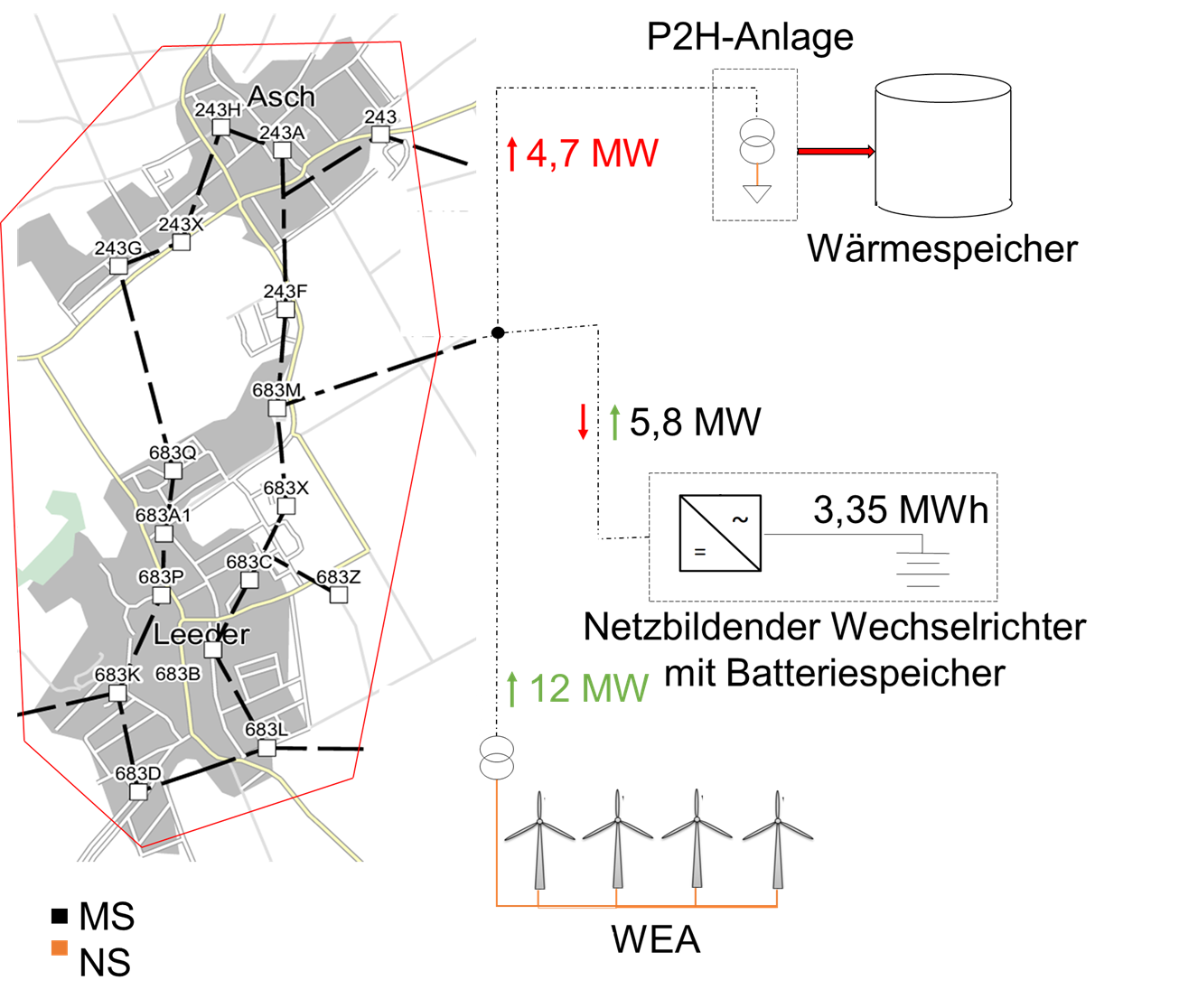
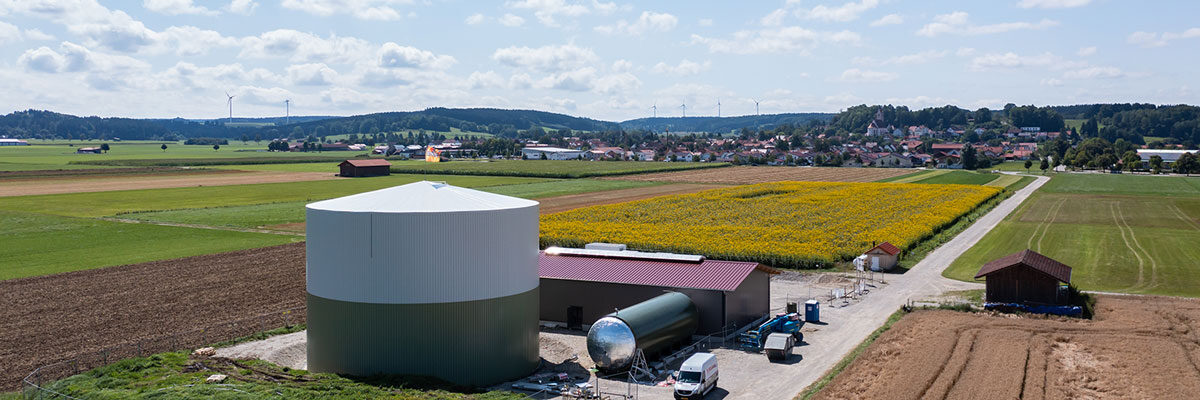
The municipality of Fuchstal in the district of Landsberg am Lech largely supplies itself with renewable energy from its own wind turbines, solar parks, a battery storage system and a large heat storage tank with a power-to-heat plant. It has received the German Sustainability Award for this.
This infrastructure and the ownership structure of the plants are almost unique in Germany. The living lab already corresponds to the interconnected grid of 2040. What is new is that a specially adapted central grid controller and rotating machines are dispensed with entirely.
| Battery storage | 3.35 MWh |
|---|---|
| Grid-forming inverters | 2 × 2.9 MW (5.8 MW in total) |
| Wind turbines (grid-following) | 4 × 3 MW |
| Power-to-heat plant | 4.7 MW, coupled to heat storage (district heating) |
| Grid | 20 kV medium voltage, including approx. 9 km of cable |
| Consumers & PV | Villages of Asch and Leeder |
Previous work
Building on LINDA
The research projects LINDA and LINDA 2.0 already showed that a local island grid supply with distributed generation works – back then with a hydropower plant as the stabilising rotating mass. “Fuchstal leuchtet” takes the next step: what happens when there is no inertia in the grid at all?
“The project, which aims at an emergency supply for our municipality, means that in the event of a blackout we will have a proven concept for supplying our municipality with electricity, giving our citizens a sense of security.”
“The energy infrastructure of the municipality of Fuchstal and the ownership structure of the plants are almost unique in Germany.”